
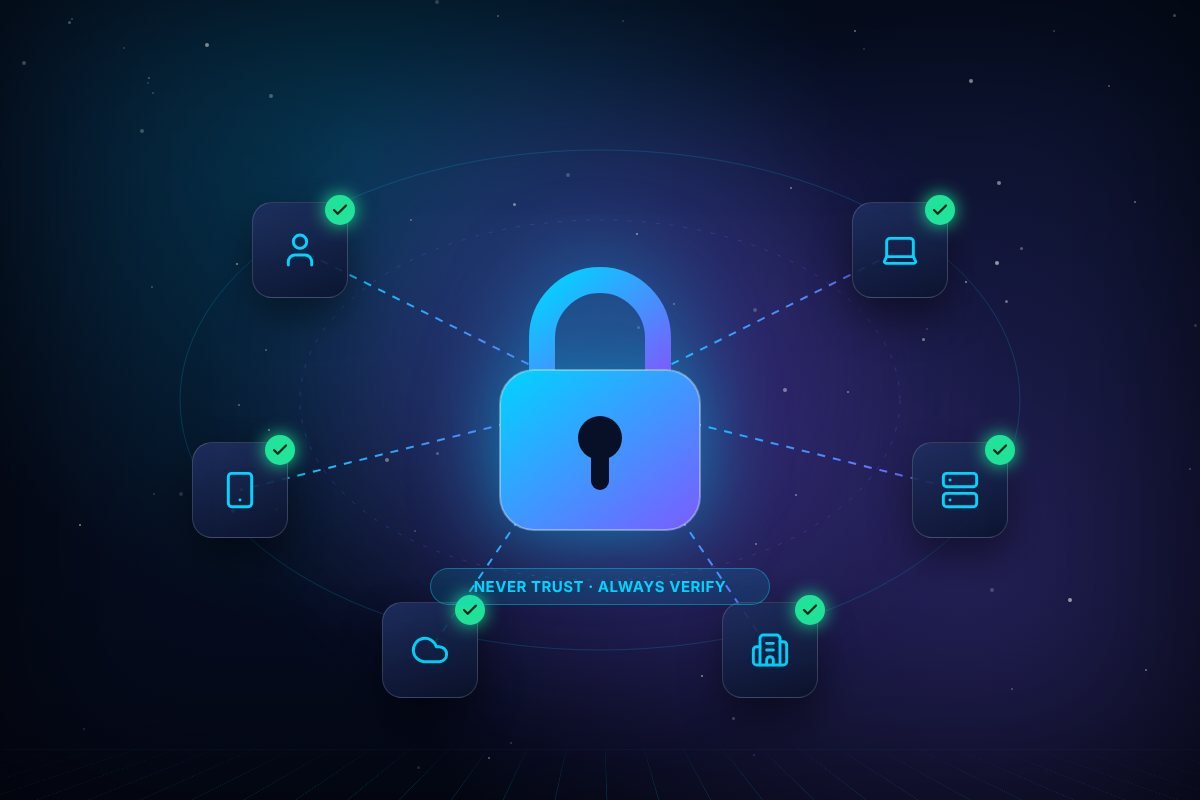
10 Zero Trust Myths Your Team Still Believes
Zero trust has become one of the most talked-about frameworks in cyber security, but it is also one of the most misunderstood. Many organisations believe it is a single product they can buy, or that it is only relevant for large enterprises. Neither is true.
At its core, zero trust is a strategy: never trust implicitly, always verify explicitly, and assume breach. It applies to users, devices, workloads and data flows across every environment.
Security is not a product, but a process. Zero trust turns that process into a measurable architecture.- Sara Reyes, Chief Security Officer
Myth #1: Zero Trust Means Buying New Tools
Most organisations already own many of the building blocks: identity providers, endpoint agents and firewalls. The work is in connecting them with consistent policy.
# Example: deny-by-default network policy
policy:
  default: deny
  allow:
    - from: finance-app
      to: core-db
      port: 5432
      require: [mfa, compliant-device]
Key Takeaways
- Start with identity: strong MFA everywhere
- Map your critical data flows before segmenting
- Measure progress with clear maturity metrics
3 Comments
SR
Sara Reyes
Oct 02, 2026Thanks Michael! Framing it as a strategy usually helps those conversations.
ReplyRK
Michael Johnson
Oct 02, 2026Great breakdown. Myth #1 is the one I hear the most from leadership.
Reply